Showing posts with label Germany. Show all posts

Saturday, May 11, 2019

In the office--

The big news of the week really isn't, to be honest. Twenty years ago, I was gifted a Danish desk a la mid-century design by my cousin. Recently, he asked me if I were 'still using' the desk. I took that to mean that he wanted it back, so I gave it to him. As a result, the office is a pile of papers and other miscellany. 

Here's a small sampling of stuff now littering the office floor that I've been holding onto since even before acquiring the desk. I perhaps should just either toss this stuff out or put it in a manilla envelope (and leave it on the office floor). 


A zinger from Dad

I haven't looked at clippings of my father's letters to the editor since putting together a memory book dedicated to him back in 2003. Reading this snippet from him now, I think I'm seeing that my Dad, a life-long Democrat, may have been becoming a bit more conservative in mid-life. I have never thought of my father as either a hardcore patriot or a prude, but maybe he was becoming one or both?  


My friend's father, fondly known as Der Meister (to be read in a Schwäbisch accent), was an accomplished artist. He trained as a silver engraver, but was also an adept painter, a sculptor and he could carve a mean woodcut. The above image shows one of his many designs he and his wife had printed up for their annual holiday card. The inside of this particular card includes a poem by Hölderlin (noted Schwabe) & heartfelt season's greetings. I so loved receiving these cards.

Der Meister: Selbstportrait (culled from the internet)

Der Meister was in art school when he was conscripted into the German army in 1940. He was put to work as a stretcher bearer on the Western Front. He'd kept a diary during that time filled with sketches and poems. I was lucky enough to view it once two decades ago when der Meister was still living. One page particularly struck me as it contained both a rendering of and an ode to his worn combat boots. 

Ritter, Tod und Teufel

Showing a picture of this postcard depicting one of the most detailed engravings by Dürer I have ever seen is almost an affront to the piece. I can guess as to what the symbols of both skull and hourglass reference, but as someone who knows very little about Christianity, I can't say I understand the piece in any fundatmental way. Apparently, the subject/s of this piece have been hotly debated for centuries. Dürer postcards in American art museums usually consist of his rhino and hare images. I caught a Dürer retrospective in Frankfurt some years back, so there happened to be a fine selection Dürer postcards in the gift shop to choose from. I still marvel at this work.

Friday, December 28, 2018

Memory and remembrance

Thursday's crossword was a wash. I knew the answer to only one, lousy clue. It was something having to do with Norma Rae the 1979 film starring Sally Field. I can usually be counted on to know a random film factoid. This knowledge made me especially good at answering all the pink cards in Trivial Pursuit. 


My dear friend Mrs. R has been on my mind the past couple of days. She died four years ago this upcoming January. I spoke to her last in December 2014 when I was in the middle of preparing to move back to the states from Zurich. I had rung her again on the 26th hoping to hear how she had spent Christmas and, for the first time in our 17 year friendship, not only did she not pick up, but also her answering machine didn't click on. I eventually got hold of her neighbor, a woman with whom I was friendly, and was told what I had feared: Mrs. R had recently entered into hospice and died. That was very hard to hear, but not entirely unexpected. She'd been unwell for some months. 

The last time I saw my friend, in May 2014, I could see she had greatly slowed down and come to rely ever more on her daughter for help. Still, her mind was fit & her humor intact. 

I was just looking at an old hotmail account and wondering why in the heck I still had it when I got the bright idea to look at all the images sent to said acount. I'm glad that I did because I found this picture---

A chance meeting in DE: Mrs. R and my bar pal from California

On the face of it, the above shot doesn't seem remarkable, but it is. In 2005, I had taken my yearly autumn trip to Stuttgart to visit Mrs. R. She and I were on the DB platform, having just visited a village flower show some 50 km away, when I spied a man I knew from back home. He was a regular at the bar where I worked in Berkeley. What were the odds we'd both be in 'small town' Southwest Germany at the same time? We three wound up taking the train to Stuttgart together, chatting all the way. 

Mrs. R was a teenager when the war started. After allied forces nearly bombed out Stuttgart, she and her 7 younger siblings were sent south to the countryside to sit out the war. Fortunately, as she had said, she and her siblings found themselves in the American sector. The soldiers were friendly and would ply the kids with chocolate. She once told me of how an American soldier took a shine to her three-year-old brother. The soldier expressed a desire to take the brother back to America and adopt him. This was not at all on the cards, but I guess the soldier was fairly adamant. It got to the point where Mrs. R kept her baby brother indoors when that particular soldier would come around. She also told me that the soldiers would often be outside 'playing ball' with tins of food. After one such game, one of the siblings noticed that the tin doubling as a ball had been left behind. He pinched it, bringing it back to the house. I will never forget Mrs. R's face as she described the thrill she and her siblings felt when the tin was opened to reveal chunks of pineapple! None of them had ever eaten anything so exotic. What a treat that pineapple must have been to them. 

The story of how Mrs. R and I met is a bit long and convoluted, so, please, bear with me. Mrs. R was the friend of a friend of an American acquaintance of mine I had made in the exchange program at the University of Tübingen. We bothed lived in the same dormitory and hung out loads together after classes. Unlike the rest of us foreign students, my dorm buddy happened to have a family friend living in the neighboring village of Wurmlingen. The family friend was a very welcoming sort and I usually got to tag along on outings to her place. My dorm mate's Uncle Geoffrey had been stationed in Germany after the war. During his time in Baden-Württemberg, her Uncle Geoff had been quartered by an artist and his wife, a former Red Cross nurse. Their daughter was the woman whom my dorm pal and I visited regularly just down the road from Tübingen. Mrs. R had been a neighbor of the artist and his wife and knew Geoffrey as well.  

During one of our village visits, Mrs. R rang the house and found out that the American soldier's niece was currently studying in Germany. Mrs. R invited us both (I think she was being polite) to Stuttgart for the afternoon. We set a date. On the day in question, my friend flaked out, so I headed to Stuttgart via train on my own. Mrs. R, as she would come to do in the intervening years, met me at the Hauptbahnhof. We took the tram back to her place for a lovely meal and a chat. My German was still fairly rough at that point and Mrs. R was very forgiving. That afternoon marked the beginning of our friendship. 

She and I spoke formally, per Sie, for the first ten years of our relationship until Mrs. R invited me to use 'Du'. We toasted the change in language with a white wine at hers. Even with the switch to 'Du', I felt most comfortable referring to her by surname. 

I remember when the film Das Leben des Anderen came out. It seemed to be a seminal film in German cinema. It was both beautifully shot and acted. She'd seen it as well and was less impressed. The film's protagonist, a Stasi officer, was protrayed as having had a heart of gold, to put it simply. Mrs. R didn't buy it. She told me that there was no way a Stasi officer would have been so empathetic. I think she referred to it as a 'Hollywood film'. She was probably right, to be honest. 

Although her life's trajectory had been knocked about by war--she'd had to quit school & watch after her siblings as a result of the evacuation--she was never bitter. She'd often say: 'What we Germans did...I don't ever dare complain.' The total capitulation and subsequent divvying up of Germany by the allied countries was talked about with a 'we deserved it' matter-of-factness. 

Mrs. R loved Bach and Barbra Streisand. She began learning Italian while in her 50s and regularly took solo trips to Pulgia. Her potato salad was tops as were her Maultaschen. She was a thoughtful person who could also be a bit cheeky. She liked to have a laugh. One of the last meals we had together when she was still ambulatory was at a pizzeria near her flat. We drank loads of red wine, eat pizza margherita and nearly shut the place down we stayed so long. I was lucky to have had her in my life for as long as I did. 

Here's a shot of us from around 2010-- 


Wednesday, January 10, 2018

Aus dem Nichts


Fatih Akin is a German-Turkish director whose work I greatly admire. He does not shirk away from telling stories that reveal our sometimes dark human nature.

The last film I saw of his was Gegen die Wand. It's a tough film to watch as it deals with sex, drugs and violence as its expressed in the lives of a Turkish woman fighting against the restrictions of her culture and a man dealing with the trauma of losing his wife. The movie is not for the faint of heart, and I had to look away during some scenes.

The latest film from Akin is called Aus dem Nichts. To explain it, one needs a bit of background. From 2000 to 2007, Germany experienced a series of murders perpetrated by a group called the NSU, a neo-Nazi outfit founded in the former East Germany. The target of the NSU were Turkish/Kurdish Germans. Ten people, including one ethnic Greek and one ethnic German, were murdered in total. A German acquaintance of mine told me the reason it took so many years for the German authorities to figure out who was behind the killings is that the police had a hard time separating the victims from the perpetrators. A sort of, 'Oh, but what were these people doing that got them killed?' The police incorrectly assumed that those who were murdered were somehow involved in the Turkish or Kurdish mafia, and, therefore, may have had it coming.

As it turned out, three ethnic Germans were responsible for the murders. Two of the three perpetrators were found dead by police (suicide?) & one stood trial. I don't know if she's yet permanently behind bars, but I hope so.

Back to Aus dem Nichts: The protagonist, an ethnic German, loses her family (Turkish-German husband & bi-racial child) in a bomb attack. She thinks she'll receive justice as the killers are caught and brought to trial. When she does not receive the result she expects, things go horribly off-course. The film did well at Cannes, so I think that's why one of our local art house cinemas secured it for a limited release here last week. Tickets for the film sold out really quickly. I stupidly had waited to purchase only to be left high and dry on movie day. Somewhat undeterred, I went to the cinema anyway to see if there would be rush tickets offered. Luckily, I showed up about 45 minutes before movie time, waited in line with other eager film-goers & was rewarded. Actually, I think about ten of us from the rush line made it in. Sometimes the early bird does get the worm!

While waiting in line, a few of us got to chatting (as you do). The woman in front of me was from Israel, but had moved here back in the 70s. Her parents had moved from Europe to British Palestine, and she was born two years after the creation of the state of Israel. The woman behind me was from Germany, but her story was far from straight-forward. She told both me and the Israeli that her parents were Jews who had escaped Poland, making their way to Germany after the war. This was where she was born. Her parents went to the American zone & applied for a US visa. After a ten-year wait, she and her parents were finally able to go to America. They had a sponsor family in San Jose, Calif., so that was where they went. The woman told us, smiling: 'My father didn't know that he could leave San Jose. He thought he had to stay there!' She also said that when she entered Elementary School the other children, upon hearing her accent, called her German slurs. She never corrected them.

If you're up for a film dealing with the nationalistic bullshit currently plaguing our times, then I would suggest you check Akin's film out.


Wednesday, December 6, 2017

Mental Map

When I was a study-abroad-student in Germany some twenty years ago, I took a German culture class. One of our student exercises was to create what the teacher called a 'mental map' of Germany based solely on what we thought we knew about the place. We were discouraged from attempting to draw an accurate map with city and state boundaries, but instead were told to focus on illustrating our preconceived notions & ideas. Most of the students created maps that included drawings of sausages and huge glasses of beer.

Our teacher, on the other hand, was a 68er & had come of age during a time of great political and social upheaval. Her map included the RAF, not to be confused with the Royal Air Force, a Swastika, and the former DDR replete with a drawing of a wee Trabbi.

Demo in Hamburg, 1968. 
Trabant

A couple of years back, I found myself at an art show at the Oakland Museum of California. There was a gal there selling prints of her watercolors and oils. I was particularly taken with her rendering of Australia, a country where my English ancestors moved to before coming out to California in the 1910s. The Australia piece was meant as a gift for her mother who hails from Australia and contains all the things that her mother holds dear about the place in which she grew up. I thought it looked like a 'mental map' of sorts and was immediately reminded of the exercise from 20 years prior. I bought the print.
Here it is--


I just spent about 3 minutes, and it shows, on drawing a mental map of my homestate of California. Don't laugh! (Well, not too loudly...)


If you're up for the challenge, then I'd be keen to see what sort of mental maps you all could come up with regarding where you're from or where you live now. Nothing is out-of-bounds save for a lack of imagination. :)

Monday, December 5, 2016

Integration through language acquisition is key.

During our short trip to CH & DE in November, my husband and I were fortunate to have spent time with dear friends, A. & N., who are currently engaged in helping Syrian refugees integrate into German society. They are a married couple, he is German by way of Syria & she is Swabian.

N. does translation work (some gratis and some paid) at court, with social services, and for the occasional doctor visit. A. helps run a city-sponsored, weekly Sprach Café (language group) at a local community center. She bakes cakes and other treats to go along with the coffee normally served. Both A. & N. assist in finding accommodation for the newly arrived, and, in some cases, employment. To hear my friends talk about it, they find the work not only rewarding but vital.

The concept of a Sprach Café intrigued me & I wondered if there were anything like that happening in areas of the US where newly-arrived refugees are living. Off the top of my head, I don't think we've any 'language cafes' running here in the Bay Area, or, if there are, I'm not privy to them. (More to the point, do we even have any Syrians asylum seekers in this part of the country?) Tying language learning with social engagement only makes sense. One has to get a sense of language used in context in order to successfully progress in language acquisition. The whole thing just seems like a great way to improve language skills while, hopefully, expanding one's social circle.

After visiting with A. & N., we spent some time in Basel, our favorite Swiss city. I found this wee flyer on the counter by the espresso machine at one of our old haunts, Frühling, in Kleinbasel.

It reads:

Do you want to improve your German, meet other people & get to know other cultures? If so, then come to our language cafe. We're looking forward to having you!

Every other Friday at Café Frühling...


It's good to know folk in Basel are also getting in on language support for those in need. The difference between what A. is involved with and what's happening at Frühling is that the Swiss effort is privately sponsored. I know this because I asked the gal making my espresso drinks ALL about the flyer. She explained that the Sprach Café is organized by two women who foot the bill for filter coffee for the 20 person+ group. -such a great idea. Honestly, I could have benefitted from one such group during my time in Zurich. There were a few language meet-ups around, but they were held at fairly busy pubs, and, often, it was just plain hard to hear what was being said. For a language practice group, a raucous bar environment just isn't ideal. I get that some of us language learners like a bit of 'liquid courage' when practicing a foreign tongue, but if you can't hear what's being said, then it all just amounts to a night out drinking.

Here's to those new arrivals finding their footing in German & Swiss German society. May their language acquisition be as enjoyable as possible! Viel Spass und viel Erfolg!

Sunday, November 20, 2016

Trip to DE & CH

The hubs and I took a brief trip to Europe the week of the US elections. However, given that the news outlets in Germany are on top of broadcasting about world events, we could not avoid hearing & reading about the Trump win. Donald's mug adorned nearly every magazine & newspaper cover in Germany & German Switzerland. It was off-putting to see him 'round every corner, to say the least.


'How dangerous is the new president?'

Highlights of the trip were jaunts to Basel, Konstanz & Zürich. Here are a few select photos--


Altstadt, Konstanz

Am Bodensee with friends.

Konstanz, as the Bodensee meets the Rhein

Along the Limmat, Zürich, Switzerland

Limmat, Zürich

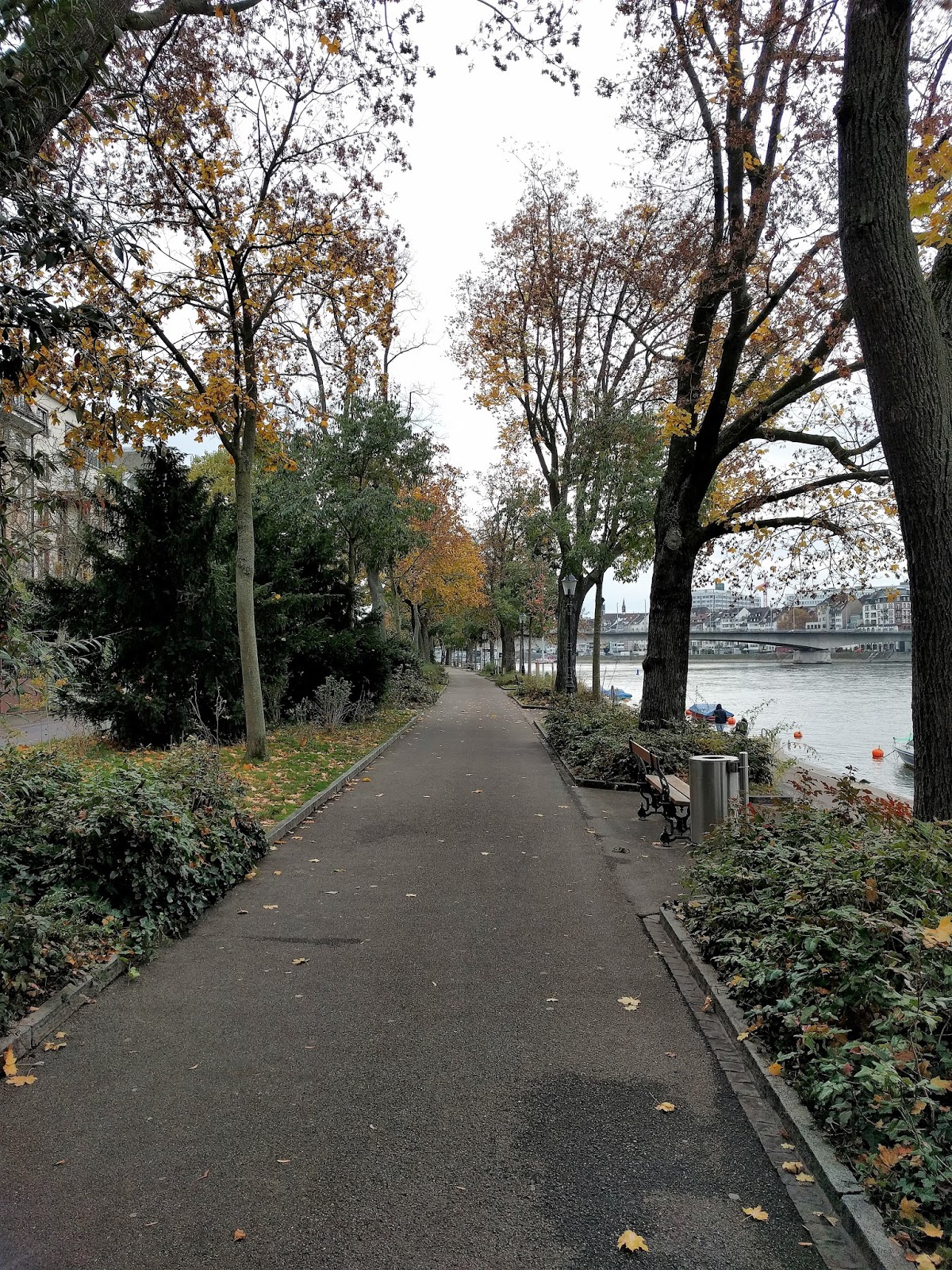
Stroll along the Rhein, Basel

Gulls along the Rhein, Basel


En route to the Botanic Garden, Basel
Altstadt, Basel
Picked up this lively print while in Basel

Checking out walking sticks at a charity shop in Basel

.
Yours truly on the Red Arrow Churchill from Zürich to Schaffhausen


I miss our life in Europe & would hope to return to live there, but, at present, a move does not seem feasible. Would that it were...!

Sunday, March 13, 2016

Janosch, creator of stories.

This year the artist, writer, and children's book author, Janosch, turns 85-years-old.  Recently, I watched a documentary film about Janosch's life that played on ARD Mediathek.  I think I might have had more questions about the secretive Janosch after watching the film than before!

Janosch was born as Horst Eckert in 1931 in Oberschlesien, an area of Germany that now belongs to Poland.  Born of a devout Catholic mother and a violent, alcoholic father, his was an uphappy childhood.  During the Nazi occupation, Janosch saw his neighbors being taken away and buildings in town burnt to the ground.  Like PL Travers of Mary Poppins fame, Janosch dealt with childhood trauma by creating what he wished he'd had instead of what was.  In Janosch's stories, parents are ever benevolent and children do as they wish.

The permissive Papa Löwe

After the war, Janosch tells the filmmaker that the family 'moved' (I can't but help to wonder if he and his family were driven out as so many Germans who found themselves in what became Poland were) to what became West Germany. It was there, Janosch said he was his happiest.  The film showed him at a 'school reunion' of sorts where he and his former class mates sat around a garden table and chatted about old times.  They had no idea that their former classmate, Horst Eckert, had gone on to become Janosch, the famous children's writer and illustrator.  One former student mentioned having been envious of Janosch's artist abilites.  

Unfortunately, Janosch was an unsuccessful art student, having tried, and, ultimately, failed to secure a place at the Akademie der bildenen Kunst in Munich.  His was dismissed from school due to, his word, 'Unbegabung' which I translated to mean an 'untalent'.

Post-art school was spent writing and painting.  His first, self-illustrated children's book, Valek, was published in 1960 to no success.  The publisher of Valek supposedly gave Janosch his name.  'A certain Janosch was meant to show up to the publisher's, but I did instead.'

Janosch spent the 60s and most of the 70s writing children's books and the occasional novel.  Nothing he published received critical acclaim.  By the mid-70s, he was broke and drinking excessively.  It was at this point that he decided to unleash a 'Rache-Akt' (act of revenge) on the world.  He had grown tired of writing children's books, and, instead, decided to write a 'kitsch book'.  For this he said he needed certain elements: a stuffed aninal--a teddy bear, the teddy bear goes traveling, and 'Weiber fangen an zu weinen' (women begin to weep).  He set about writing, taking a trip to Ibiza during the process, and, in 1978, 'Oh, wie schön ist Panama!' was published.  'Oh, wie schön...' is Janosch's most famous work and earned him a German literature prize.  Janosch has sold over 12 million books.  He is regarded as Germany's bestselling children's book author.
The main characters of 'Oh, wie schön...' der Tiger, der Bär, and die Tigerente

For the past thiry years, Janosch has lived a life of quiet obscurity on the island of Tenerife.  In the film he's shown at home creating bright, abstract watercolor canvases in a space covered with statues from South America & wall hangings of all description.  Aside from participating in this documentary, I suspect Janosch rarely visits Germany.

Monday, February 29, 2016

Studienauftenthalt in SW Deutschland

Ein jahrlanger Aufenthalt im Ausland kann schon neue Erfahrungen mit sich bringen.  Vor etwa 18 Jahren habe ich als Austauschstudentin ein Jahr in Tübingen verbracht.  Vor meiner Reise ins Ausland habe ich gedacht, ich hätte alles im Griff.  Mein Deutsch war gut.  Ich hatte schon einige Erfahrungen als Reisende durch Europa, und ich dachte, irrtümlich, dass die Deutschen den Amerikanern ähnlich seien.  Während meines Austauschjahrs wurde mir klar, dass fast alles, was ich vor der Reise gedacht habe, falsch war.

Es begann mit der Sprache.  Niemand an meiner Universität hat mich darauf vorbereitet, dass die Sprache, die hauptsächlich in Württemberg verwendet wird, nicht der Standard ist.  Tübingen liegt ja in dem Schwabenland und im Schwabenland schwätzt man Schwäbisch!  Und 'meine' Sprache, Englisch, konnte fast jeder.  Zu der Zeit dachte wohl niemand in Amerika daran, dass 'unsere' Sprache schon der ganzen Welt gehört.  Ich bin nach Deutschland gereist, um mein Deutsch zu verbessern und jeder wollte mit mir sein Englisch üben.  Wie deprimierend!

Nach einer Weile kam ich schon einigermassen mit der schwäbisch-gefärbten Sprache klar.  Ich habe auch Glück gehabt und bekam ein Zimmer in einem Studentenheim, wo man kaum mit mir auf Englisch reden wollte.  Durch Kontakt mit meinen Mitbewohnern hat sich das Bild von Amerika, das ich bis jetzt im Kopf hatte, allmählich geändert.  Meine Heimat bedeutet den anderen 'Reiseland' und 'Baywatch'.  Oft wurde mir gesagt:  'Oh, du kommst aus Kalifornien!  David Hasselhoff!  Baywatch!'  Der Fehrnsehsendung hatte ich tatsächlich nie gesehen.  Ich komme auch nicht aus Südkalifornien, wo 'Baywatch' gedreht wurde und so ein Lebenstil entspricht meinem nicht.  Ausserdem ist das Wasser bei uns im Norden eher kalt.  Man trägt ja einen Pulli am Strand umd keinen roten Bikini.

Besser wäre es gewesen, wen die Deutschen mit mir nur über Fehsehsendungen gesprochen hätten!  Eins der Lieblingsthemen im Studentenheim war Politik.  Meine Kommilitonen wollten von mir natürlich wissen, was ich von meiner Regierung halte.  Durch solche Gespräche wurde es mir sofort klar, dass ich, im Gegensatz zu den Deutschen, schlecht informiert war.  Ich war Bush-Gegner, aber konnte ich meine Meinungen klar ausdrücken?

Nach dem Austauschjahr kehrte ich mit meiner geänderten Weltanschauung in die USA zurück.  Für die Auslandserfahrung damals bin ich immer noch extrem dankbar.   

Sunday, February 7, 2016

'Real' pretzels

I can't seem to find food grade lye anywhere.  I've looked in health food stores, pharmacies and in international food shops. I can tell you where to find pro-biotics, feta from Bulgaria and bone marrow, but lye?  Nope.  The big supermarket chains, of course, I skipped looking in entirely.  Someone told me recently that Mexican grocery stores stock food grade lye.  I guess I'll have to find out what 'lye' is in Spanish and go on the hunt.  Before that, however, I'm happy to say that our local German market stocks a pretzel mix (just add oil and water!) for lazies who can't be arsed to follow an actual recipe.  Normally, I wouldn't go for that sort of thing, but this mix comes with 10g of food grade lye.  The magic ingredient has been found.

Lye-lye-lye!

The pretzel prep is pretty basic: mix yeast, flour, and water until it forms into a ball.  Let the dough stand for thirty minutes before rolling it out into a 'loaf'.  Cut the dough into 8 to 10 pieces, then shape accordingly.  Brush the pretzels with the lye solution and let stand another twenty minutes before baking.  Easy-peasy.  The lye didn't quite do its thing and the pretzels came out with a matte appearance instead of the lovely sheen one associates with Brezeln from the Fatherland.  I can't say I was wholly disappointed in that the pretzels were still fairly chewy and had just a slight crunch when biting into them.


Tastes better than it looks.

Sunday, July 27, 2014

I heart Munich.

I could go on at length about how wonderful it is to visit Munich.  I could write about the great beer & Breze.  -mention how I dig the English Garden or enjoy hanging with the sun-bathers along the Isar.  Really, there are so many reasons to 'heart' Munich.  Instead of writing, I'll simply submit a few reasons, in picture form.

One of a handful of gorgeous, old Beetles I saw around town.

War memorial, Karolinenplatz.
Art at the Pinothek Modern.

Lovely café fare, Obergiesing.
Surfing the Isar.

Old-timey tram.

Wednesday, July 23, 2014

In response to Schlöndorff...

In 1999, the much-heralded German director Volker Schlöndorff penned an article for Der Spiegel casting a critical eye on the Hollywood 'machine' and its propensity to produce mediocre films that permeate cinemas across the globe while muscling out local product.  I came across a truncated version of his piece in a German language instruction book I've recently been working through. 

Below is my 2 Pfennigs' worth of a response auf Deutsch:

Ich stimme Herrn Schlöndorff meistens zu.  Filme, die nicht als 'Mainstream' betrachtet werden, haben weniger Chancen internationale Anerkennung zu bekommen.  In den letzten vierzig Jahren hat der Hollywood Blockbuster die Welt allmählich erobert.  'Ins Kino gehen' bedeutet schon in Stück Amerikas 'Way of Life' zu kaufen, aber entspricht es der Wahrheit oder nur einem Stereotyp?  Schlöndorff erwähnte, dass wir derzeit keine Gelegenheit haben, mit Jeanne Moreau 'über die Champs-Elyseés' spazierenzugehen.  Leider dürfen wir auch nicht mehr Audrey Hepburn auf dem Weg zu Tiffanys begleiten, was ich sehr bedauere.
Meiner Ansicht nach hat sich die Filmindustrie während der letzten 60 Jahre enorm geändert.  Als Schlöndorff mit seiner Oskar-Statuette nach New York ging, um 'Death of a Salesman' zu drehen war die Goldene Zeit der 70er Jahre schon längst vorbei.  Schauspieler wie Faye Dunaway und Robert Duvall, mit denen Schlöndorff einige Jahre später arbeiten wird, haben schon die möglicherweise grössten Leistungen ihrer Karriere gezeigt.  Mit dem riesigen Erfolg des Films 'Jaws', der Anfang der 70er gedreht wurde, kam schon der Beginn des Endes der herrvoragenden Leistungen der Hollywood Filmstudios.  Der Blockbuster wurde geboren und damit die Sucht nach grossem Gewinn.  In den 80ern und 90ern wurden eine Menge mittelmässiger Filme mit zahlreichen Fortsetzungen gedreht und in die ganze Welt verschickt.  Obwohl der Blockbuster immer noch herrscht, sehen die heutigen Aussichten der Filmindustrie eher positiv aus.  Die sogenannten Aussenseiter beschäftigen sich mit ihrer Kinokunst, die oft ein ziemlich grosses Publikum erreicht.  Regisseur Richard Linklater, dessen derzeitiger Film 'Boyhood' gerade in den Kinos läuft, macht seit 25 Jahren seine Dreharbeit hauptsächlich in Austin, Texas, wo er wohnt.  Hollywood betritt er ja selten.  In einegen Fällen drehen Filmemacher doch scon einige 'Mainstream' Filme, um die kleineren 'Independents' finanzieren zu können.  Ich würde schon weniger darunter leiden, dass es Rocky X. oder noch einen Bruce-Willis-Cop-Film gäbe, wenn es bedeutete, dass ich mir auch noch einen guten von den Aussenseitern anschauen könnte.

Tuesday, August 20, 2013

Brocki 'find' #3

Der Mosaiktisch der 50ern...

I'd like to think that this tile top table was generated as a result of the Economic Miracle that took hold of post WW II Germany.

When looking for like tables from mosiac pattern to markings on the bottom side of the table-top, I came up fairly short-handed.  It would appear that this table did indeed come from a maker in Germany ca. 1950s.  More information I could not discern.  Any thoughts, folks?

Aerial view...

Sunday, June 2, 2013

'How's life in Germany?'

'I was born in Heidelburg,' the postal worker enthusiastically told me as I spread out a few postcards to be sent to Switzerland before her.  I repeated the city's name correctly out of habit as if I were teaching German 101 to students at uni.  'Ah, Heidelberg!' I said with a smile on my lips lest the woman sitting behind the counter take some sort of offense at being corrected, or, in fact, realize she was being corrected at all.  'No, Heidelburg,' she said again. I dropped it.  If a woman 'from Germany' (she left the Fatherland at eight months of age) wants to show off her German skills to me, then I should just let her.

There was one thing that folk said to me during my recent trip back home to California that I could not let pass and that was this: So, how's life in Germany treating you?  One of my favorite responses to this well-meaning, yet off-the-mark query was: As far as I know, life in Germany is great, but I live in Switzerland (cue tension-diffusing smile here).

My realigning one's geographic challenges was never meant with ill intent.  I just really wanted to remind folk that the city of Zurich is within the country of Switzerland.  I live in Switzerland, and, yes, the part of Switzerland in which I live is relatively close to the German border.  The German city of Konstanz is about an hour train ride from Zurich.  When I was home, I drove well over an hour to have dinner with an old friend one evening and I never left my home state let alone my country in order to do so.

After facing the third 'how's Germany' question in under two weeks, I began to wonder if my years of studying German and multiple visits to Germany had predisposed people into thinking that, of course, a 'German-o-phile' like me would wind up in Deutschland.  Fair enough, I had always hoped I would find myself living in Germany, preferably the Southwestern region, too.  As it stands, I am now living due south of Swabia, and close enough, a train ride away in fact, to visit regularly.  So, really, when asked by people how Germany is I could honestly answer that it is indeed fine.  (-except, of course, I don't live there.)

Wednesday, February 20, 2013

Language accomodation

There was a new guy called Michael at my volunteer job today.  -a job, im grossen und ganzen, conducted primarily in German.  When I met Michael, I pronounced my first name in a distinctly American way, and that must've given him the green light to try out his crap English on me.

Rule #1: if my German sounds like it's better than your English, then I'll not be speaking to you in my native language.

I tried to abide by Rule #1 for the length of 'new guy' hanging about the clothes shop, but lapsed a bit when a punk from Detroit, yes, that Detroit, waltzed through the doors saying something like: Deutsch...sprek...nicht gut.  We immediately got to chatting about 'Homeland' security, travel, and the difficulties of becoming a dual nationale.

A little bit later, Michael needed to let me know that someone had taken a small stack of clothing 'coupons' from the main office and that we should be on the look-out for any coupon not possessing his signature at the bottom.  This information was communicated to me in piss-poor English to which I responded with: du kannst mit mir auf Deutsch reden.  When that request went unheeded, I 'amped' it up with the slightly annoying: wie bitte?  Ich versteh' kein Englisch.

As if to explain his behaviour, Michael told me that when he speaks to Germans, he uses Hochdeutsch, and when he speaks to Americans, Britons and the like, he uses English.   A Swiss friend of mine termed the tendency of German Swiss to switch from Swiss German into the language of the interlocutor 'accommodating'.  That logic doesn't take into account those native English speakers already possessing a fairly solid foundation of German.  What it does reinforce is the knowledge that standard German for German Swiss is almost as much of a foreign language for them as it is for me.  The main difference being that in present day America there are relatively few German language newspapers, if any, no TV stations broadcast from the Fatherland, and, if there were to be bilingual education, then, in my home state of California, the second language learned would be either Spanish or Mandarin.

While I understand that 'German German' may be considered a foreign language 'round these parts it does, unlike in America, feature fairly prominently within the culture.  German, with some exception, is the language of instruction, the language of print media, and, save for some Swiss German programing, much of what one hears on television.  These people grew up with German, in various forms, and I, as an American, did not.

I live in a place where standard German is spoken, not all the time, but one hears it.  I use German in order to navigate through my daily life here in Zurich.  My knowledge of German helps me make sense of the world around me.  I am lucky enough to understand a bit of Swiss German, and, on occasion, catch subtle humor, register mild upset and all sorts of other things that non-German speakers certainly would miss.  Mostly, I only speak English with other natives and foreigners not possessing German skills.  In order for me to feel like less of an outsider and to be able to communicate with folk who either do not or will not speak English (I do not assume that the Swiss should speak my language, we are not, after all, in America), then I feel I need to be linguistically savvy, so to speak.  If I had grown up watching Sesamstrasse instead of Sesame Street or had read the San Fransiskaner Tagesblatt instead of The San Francisco Chronicle, then, with German presumably more firmly entrenched in my head, maybe I'd be prepared to speak English with Michael and any other Swiss German who wish to 'accommodate' me. 

The Sesamstrasse Gang

Wednesday, December 26, 2012

'New hometown'

Over the past few weeks I've read in various different publications the expression 'new hometown'.  The latest example featured someone who'd moved to a new city and within one month was referring to it as, you guessed it, her 'new hometown'.  Like with the confusing, new use of 'bespoke' to now mean anything hand-made, I'm a bit perplexed at how to understand the joining of 'new' with 'hometown'.  Sure, I've read 'adopted hometown' which I've taken to mean 'the place in which one now lives and considers home, but not the place where one is originally from'.  That makes sense.  Of course, there is also that interesting breed of folk who, for whatever reason, were moved around a ton by their parents when they were growing up.  They may claim multiple 'hometowns', or even, 'home regions/countries'.  I think, however, that the majority of us aren't 'army brats' or children of diplomats and didn't have (what I see as) the privilege of experiencing a variety of different cultures/places during childhood.

Maybe most young folk today have moved around quite a bit since being born, and I just sound like a crotchety, old crab-ass here, but, when I was a kid, I lived, with the exception of a few years, in the same town until I turned 18 and moved away from home.  Even then, I only moved about 35 miles away.  We're not talking about a massive uprooting.

I recall meeting a fellow 'Californian' while working at a Farmers' Market a few months back.  -turns out the guy was actually from Ohio.

Our exchange went something like this--
Me: (upon hearing his American accent) where you from?
Dude: California.
Me: Oh, really?  Me, too.  Where are you from (in CA.)?
Dude: San Francisco.
Me: Cool.  I'm from Pacifica.  You know, it's just south of city on HWY 1.
Dude: (blank look on his face) Oh, cool.

The above exchange alone should, sort of, tell the reader that this dude was not from San Francisco.  At that point in the convo I figured he was from a small town somewhere in the Central Valley, or up by the Oregon border or what-not.  I teased him a bit about not knowing Bay Area geography and he fessed up to having moved to SF from Ohio and living there for about six years before moving to Zurich.  I'll wager he probably referred to SF as his 'new hometown'.   

Ohio, with its very pronounced seasons, and, I would imagine, different architecture based on the fact that it doesn't suffer from earthquakes, is very, very different from coastal California.

We are shaped by our environments.  I have to say that, compared to an Ohio teen, I had it pretty easy all year 'round.  -no snow-shoveling.  -no intense summer heat waves.  -no giant insects.  Of course, I didn't appreciate how good I had it until I left.  I remember my first 'white' Winter when I was living in Germany.  I went outside to 'experience' snow, took my first step, and promptly fell on my ass.  I didn't even know how to walk in the stuff! 

Since leaving the home-turf in 2009 for places both snowy and foreign, I can now say I know how to successfully walk in snow.  I wouldn't say, however, that the town in which I have been living for 7 months, Zurich, is my 'new hometown'.  And it would certainly take years for me to even consider Zurich my 'adopted hometown', if at all.

Saturday, October 20, 2012

Minor annoyances...

I've been living in ZH since July and have compiled a wee list of things that bug me.

They are, in no particular order of importance, as follows:

*kitchen rubbish bins are tiny and lid free, so they both fill up and stink quickly.

Image borrowed from a Japanese blogger, I wonder if she is also annoyed by the rubbish situation here?

*recycling is off-site like back in the 70s in California, so you must schlep your stuff up the street/down the street and/or to the store where they accept plastic bottles, but only TWO types of plastic bottles.  The rest of the plastic is thrown out.  A couple of giant yogurt containers from the Turkish market in a half full 35 liter bag and it's all over.


*no screens on any windows.  There are roaches living in the bush outside the kitchen window that then come in and crawl around every time I leave the window open.

*puffy pretzels (yes, I know this isn't Germany, but I just wish that one could also find a pretzel here with 'skinny arms', if you know what I mean)

Fun photo, but no seeds on my pretzel, thanks!

*pedestrians in the bike lanes/not looking where they are walking.  I've already run into one man who seemingly popped out of a hedge and into the road in front of me and was nearly felled by tram tracks as I tried to avoid riding into the slew of folk crossing at all points over the road and through the bike lane.

The brash response to this short list could be: if you don't like it here, then go home!

I do like it here very much save for a few little 'bumps in the road'.  I've actually had chats with natives who also are neither keen on the lid-less rubbish bins nor the lack of window screens (I think the one guy has allergies, or something, and wound up ordering screens off the internet), so I feel a bit less like an a-hole about making a fuss.

PS: you should see my 'list of annoyances' regarding my home country! :D

Monday, February 14, 2011

"Spa-TAHN" and other jazz.

I went with a dear work pal out tonight for dinner in the 'hood. Having an abundance of food choices around the UWS, we weren't quite sure where to go. After a few rounds of emails, we decided on a place that was in the vicinity and boasted a nice-looking website.

Snotty, balding, concierge-like, older host and his younger, thin chiquita-minion who could have really benefited from a breath mint (not eating all day just gives you shit breath and a crap complexion, sister) were not the least of the restaurant's shortcomings.


Our well-meaning yet clueless waiter named, um, "Sirilliam" told me when I asked after their tap beer selection of a great new German beer they had called, "Spa-TAHN" (apparently it rhymes with 'baton'). Excuse me? "Spa-TAHN"? I asked if this exotic beer were spelled, "S-P-A-T-E-N." He nodded. Then I asked if I could correct him on the pronunciation. It's "SPAH-ten" I said. (I could have gone further to include the actual German way of saying any word beginning with an "sp" is "schp," but I didn't want the dude's head to explode.) I then asked him what kind of Spaten--lighter or darker. "Oh, no. We don't have any light beers. It's a darker beer." Having already lost trust in his ability to know beer in the slightest, I decided to give up on ordering anything dark/light/foreign/domestic at all.

Our food came in good time. I ate with gusto my beet salad and sucked down tasty yet small mussels. My pal didn't really like her "Aged" burger, and, at 18 bucks a pop, she really should have. Boo on you, Aged. The service, slow but well-meaning, could have used a shot in the arm. And, as you'll read, better training not only in how to pronounce product names, but also how to open said product!

The real fun came during the end of our stay when the table next to us ordered a bottle of red wine. I happened to look their way as our waiter extraordinaire was managing to strangle the bottle open with a choke hold that would have killed a cat in mere minutes. The bottle's label was facing away from the customers as old what's-his-name was jerking the wine key back and forth as a way of forcing the cork out. Never mind that he actually had a two-hinged wine key that, had he known how to use properly, would have done most of the "heavy lifting" for him. Not wanting to prolong the agony, I looked away before he'd finished extracting the cork, only to hear my seat-mate say, "Oooh, he's spilled wine on the customer!"

Door knocking in Duboce Triangle and beyond...

Wednesday two weeks' back saw a small group of us go out knocking on doors for No on G, save Sunset Dunes Park. We tackled an area of to...