Showing posts with label history. Show all posts

Thursday, May 30, 2019

431 Jessie St.


According to city records, this building has never housed a printing press. It was, at various times throughout the 20th century, a saloon, a candy company, a window display business, a charitable institution, and a sign painting company.

But, given the ABCs across the top of the building's facade, had it also been a printing business at some point? I'm a horrible internet sleuth; my search yielded little results. That which I have shared was cribbed from my husband.

The uber-trendy, dark grey paint job and house nos. du jour above the entryway would sort of imply that monied folk own the space now. For what purposes, I do not know.

Sunday, October 28, 2018

One city, two faces

Someone recently asked me what I liked least about living in San Francisco. My mind went immediately to what I like least about San Francisco. Full stop.

Of course, my thoughts on the matter could probably be applied to other prosperous cities around No. America like Vancouver, Toronto, Boston, New York City...
I began my answer with this wee story:
I remember meeting a friend and her friend for lunch downtown. It was probably 1990. The friend of a friend was wearing a vintage, haute couture (her words) Chanel jacket. We complimented her on her coveted piece. ‘Thanks, it was my Grandmother’s. She was from San Francisco, afterall’. My response was something like: By the time I knew my Grandmother, she’d graduated to wearing elastic-waistband, polyester slacks and she was from San Francisco, too! (I laughed as I said this; the other two didn't.)

At the risk of sounding dense, meeting the 'haute couture' girl was truly the first time I had thought about the pockets of great wealth that have always existed in this city. In the 1950s, my Uncle Buddy had worked for a time as a chauffeur for prominent San Francisco families, but I hadn't really thought about the sorts of people who might have employed him. By the time I had come into the world, my Uncle and his partner were living in a lovely flat atop Nob Hill. They seemed to me to have had money, but I now realize that one could rent a nice place in SF in the 1950s and still be of modest means. Rent control meant that Lee and Buddy could continue to afford living in their cozy digs as the cost of living steadily climbed throughout the ensuing decades.

The red 'X' marks the spot, approximately, where Buddy and his partner, Lee, lived together for almost 50 years. They weren't living high on the hog, but they were definitely 'wealth adjacent'.

Nob Hill: Grace Cathedral in the center of the shot.

I asked my mom, recently, if she knew who Buddy had chauffeured for and she told me that he'd driven around members of the Spreckels family, heirs to the Spreckels Sugar Company fortune. Everyone in my family of that generation save my mother is deceased, so the story can't be corroborated, but it does make for a good yarn.

Below is an image of the Spreckels family mansion--

The novelist Danielle Steel now owns this architectural wonder. 

As you might have guessed, I come from working-class San Francisco stock and my people were bus drivers, bartenders, pizza-makers, firemen, foster mothers, floorers, cannery workers, cleaners, longshoremen, etc. As a result of my upbringing, I had tended to regard SF as a working class town. By the mid-20th century, the majority of working class areas of SF were geographically removed from the very monied areas. If found yourself in the SE and SW districts of San Francisco back in the 1950s, then you were in blue collar territory as far as the eye could see.
The numbers of working-class (and middle-class) residents have been shrinking at a fairly rapid clip since the last decades of the 20th century. Housing costs have far outpaced wages. Folk from lower socio-economic strata can no longer afford to move here. I live in a former working-class area of SF. In fact, the original owner of the house (built ca. 1940) we are renting was a postman. The houses in this area are modest. Most were built with 2 bedrooms and 1 bath. These same homes now regularly sell for over a million dollars. The 'family car' of newly minted residents seems to be a Porsche Cayenne or one of the other plentiful European SUVs on the market.
Buddy's father, my Grandpa Frank, was a streetcar* conductor. Were my Grandpa alive and working the same job today, would he not only not be able to afford to buy the house he did back in the 1940s in Visitation Valley, but he’d probably be renting out in the Central Valley some 80 plus miles away and commuting in hours a day to work as a city bus driver.

The 22 Fillmore (now a bus route) was my Grandpa's line.

The 22 Fillmore, coming and going.

I don't really have anything against people who can affored fancy clothes from France. But, frankly, this city is now almost exclusively geared toward those with shed loads of disposable income. And, as I told the person who asked me, I dislike that fact the most.

*busses have largely replaced streetcars

Thursday, September 13, 2018

Found Object Art


As a family, we took annual summer trips out to the Gold Country when I was a kid. The drive took us out east toward the state capitol of Sacramento and up into 'Big Trees' territory where we camped, swam, fished and got regularly sunburnt. The four-hour drive to our destination was fairly unrewarding save for seeing a series of driftwood sculptures dotting the mudflats along the 80 freeway near the Bay Bridge.

We kids always marveled at them. Ooooh, Snoopy and the Red Baron! King Tut! A mummy in a canoe and a giant hitchhiker's thumb! What?! Why?!

The sculptures were dismantled sometime in the late 80s. In an art 101 class around the same time, I read a passage in our text book on Found Object Art with an accompanying image showing the mudflat scuptures. I thought, Oh, that's what you call it!

Someone brought them up the other day in conversation and I was inspired to do some digging on the interwebs to see if I could find any of the pieces I thought I'd remembered. I found King Tut (see above).

And I found Don Quixote fighting a windmill---


And this guy as well---

Native American on horseback

I imagine that while we kids thought these constructions were 'neat', many adults might have thought them 'junk'. Perhaps that's why they were ultimately dismantled. -shame, really.

Interestingly, if one ever watches the Hal Ashby movie Harold and Maude, then one can see shots of the two title characters enjoying the view at the mudflats.

Here's a still from the film---


Harold and Maude, ca. 1971


Talking to most folk my age who grew up here, you'd think these structures were almost something mythical. Were they really there? Did we really see Snoopy fight the Red Baron? Thanks to the internet, I can say that, yes, they were there and they helped make my family's road trips across the bridge something magical.

Thursday, August 30, 2018

What's in a name?

Someone recently sent me a link to an area map that purported to show the origins of names for cities found around the SF Bay Area. I was reading the information with interest until I found the entry for my hometown, Pacifica, and read that the reason it is so named is because the town lies along the Pacific Ocean. This is patently false, so I pretty much discounted the rest of the list.

I would like to share how Pacifica (easily 'google-able' info., might I add) was given its name. 

Some months ago I posted about the Diego Rivera mural displayed at a local junior college that had been created for the 1939 World's Fair held on Treasure Island. Along with the mural, the college also has on display sculpture connected to the '39 World's Fair. One such piece, created by San Francisco artist Ralph Stackpole, is a model for Pacifica, an 80 foot beauty displayed on the fair grounds. The most imposing sculpture created for the fair, Pacifica was certain to have been a focal point for visitors. 

Here's Pacifica in all of her eight-storey splendor--


Made of plaster and mesh wire, Pacifica was only ever meant to be on temporary display. When the military took over Treasure Island in 1941, she along with other fair 'left-overs' were destroyed. 


This period postcard shows Pacifica sort of receiving fair-goers. Incidentally, the structures flanking the crowd were designed by San Francisco architect, Timothy Pflueger. A few of his buildings still survive here in town, the Castro Theatre and the Pacific Telephone building among them. 

In 1957, residents of the newly incorporated town voted for the name 'Pacifica' in honor of the sculpture created by Ralph Stackpole. The city's seal, designed a few years later, reflects this choice. 

When I was a kid, I had no idea of any of this. I always thought that the city seal image looked a bit like Medusa. 

So, now you know. Put that in your pipe and smoke it!


Sunday, July 8, 2018

San Franciscana

My Mother grew up in a place called Little Hollywood in San Francisco. For years, I thought that Little Hollywood was its own district. It wasn't until I was digging around the internet that I realised LH was a small section of the district of Visitacion Valley in SE San Francisco. 


Shaped like a slice of pie!

The origin of the name Little Hollywood is somewhat disputed. My mom always told me that LH was so named because Mae West had stayed in a house in this part of town when she would come to San Fran to perform. Yet my mom also told me that LH may also have gotten its name due to there having been planted palm trees a la Los Angeles during its creation as a neighborhood. It certainly could also be that the style of the homes mimicked those that had been built in the Hollywood Hills. Well, whatever reason, I think the name is kind of fun. 


Initial stages of Little Hollywood, 1915 (Looking south)

Below: Little Hollywood, 2018 (Looking east)


I went looking for the house that Mae West had supposedly bunked in and found it to be probably the grandest home in Little Hollywood by a long shot.


Casa Bahia Loma, Little Hollywood. (Alright, Mr. DeMille, I'm ready for my close-up.)

Incidentally, I also went by my maternal grandparents' old house and found it to be rather a dump. This area, sadly, hit an economic slump in the 60s and 70s and many of the homes fell into varying states of disrepair during that time. Their home was one of them.  


Also of note: When looking for SF district maps online, I noticed that, depending upon who had created the map, the districts shown would vary. 


Here's a map, ostensibly, for out-of-town visitors--


The entire southern portion of the city is not shown. 


Here's a map showing voting precincts--


I live in District 11.


Estate Agents' maps show more subdivisions--


Down in the SE portion of the map is Bayview/Hunters Point. (Visitacion Valley/Little Hollywood isn't even on this map.) This area of town is probably the most economically disadvantaged in SF. -don't want to buy a home in Bayview because of the crime stats and (mostly) bad press? Well, then, Bayview Heights might just be for you! 

Interestingly, the above map shows that I live in Mission Terrace, a slightly more tony area than that of the Excelsior. Go, figure. 


I will leave you with an image of the irrepressible Mae West--


Thursday, April 12, 2018

Walk to Land's End

The Golden Gate as seen from Land's End
Even though I've been under the weather for the last two weeks, or so, I felt well enough to meet up with my brother for a short walk at Land's End over the weekend. Strangely enough, I don't recall ever having walked the path along the coast there before. It's literally just up from the Cliff House, a place I have been to many times over the decades, and yet I had never thought to walk just up and over the hill to Land's End. The current incarnation of the Cliff House, I'll note, is nothing like the  one Adolf Sutro had built before the turn of the last century. Not one to forget his German roots, Sutro had the Cliff House built in a style meant to mimic German castles. I don't see that in the old pictures of the place, but I do see that the original Cliff House had an 'Old World' charm about it. Sadly, that first structure was destroyed in a fire over a hundred years ago. The current joint is a boxy blah of a thing. The view from the back of the building overlooking the ocean, however, can't be beat. 

Across from the Cliff House, Sutro had built an observation tower (from which one could observe the Pacific Ocean and the Marin Headlands) and an adjacent viewing deck. A Conservatory, smaller than the one in Golden Gate Park, also stood on the grounds and housed Sutro's exotic plant collection. Also dotting the finely manicured grounds were various imported European statuary meant to, I would guess, give us Wild West types some 'culture'. The only statue remaining on the grounds, now a part of the SF Parks Service, is one of the Goddess Diana. 

My brother.


Sutro Heights ca. 1890 (above); Diana, the last statue standing at Sutro Heights (below)


View from the path at Land's End
My Uncle told me recently that his brother, my favorite Uncle, had his ashes spread at Land's End after he died at the age of 43 back in 1986. I was a teen then & didn't get the memo re: ash spreading, so this was news to me.  Given that the wind is virtually ever present along the coast here, I couldn't help but have a chuckle at the thought of dear Uncle's ashes going every which way when thrown. Sure enough, my Uncle added that the ashes had indeed caught flight, scattering along the nearest hillside. I told my brother this story during our walk. We had a good laugh. 

Saturday, March 3, 2018

The few, the proud....

the North Americans working at Selfridge's in Oxford Street were a unique bunch. There were only a select few of us in the induction room, but we were, by far, the most talkative, sort of, 'go-getters' of the lot. When I say, 'go-getter', I really mean 'chatty Kathy-types'. The Selfridge founder was an American businessman by the name of Harry Gordon Selfridge, so I guess it only seemed right that I apply to work there. That and I had no other job prospects at the time.  

I recall the induction (what we here would probably call a 'training') as being more of an indoctrination and for almost 7 hours we were treated to information on how Selfridge's Co. became the money-making monolith it is today and how to keep it that way.  It sure fostered my commitment to the 'team' to learn that I, at six quid an hour, would be helping to ensure Selfridge's earns somewhere in the range of one billion pounds that financial year.  Ugh.

Interestingly, the induction leader failed to mention that HG Selfridge, after having lost his fortunes from both the crash of '29 and due to his free-spending ways, died in dire straits in 1947. 

Harry Gordon 'There's no fun like work'. Selfridge


During induction, I had been fortunate enough to sit next to a lovely man from Manchester who had just spent three years in Salt Lake City, Utah before moving to London for work. He and his American partner intended to move back to SLC as soon as they were able. Knowing a little bit about Utah, I would think that being out and proud in Salt Lake would not work too well. The Mancunian found Mormons to be 'very accepting' people. I sure hope he's right. And, he told me, that there are lots of gay Mormons dotting the landscape of Utah. Safety in numbers. 

Walking down to the employee locker rooms (where the wait-list for an employee locker was four months) after induction in a herd of other employees, I couldn't help but overhear the conversation of a few nattily dressed young men (presumably from the men's finery dept., or whatever it's called). One was telling the others of a particularly thick-headed customer that he had been dealing with during his shift. The employee telling the story slipped into an accent that could have passed for American. Then, by way of making an excuse for the customer's denseness, he went on to say that the guy was from the states. Yes, that explains it all doesn't it?

I like to think that I did ole Harry Gordon proud when I reached out, tapped this employee on the shoulder and said in my Californian best, 'Nice American accent!'  His friends fell out laughing while he mumbled something to the effect of: Oh, the shame!


Friday, January 26, 2018

Honshu, Japan, Pt. 4

My friend in Japan is very sweet. When I told her that I was taking a Japanese course she said that her boyfriend could be my speaking partner. If he were local, then I might take her up on the offer. It would be good to have a language partner who didn't speak any English. I'd never be tempted to 'cheat' as there would be no point.

I had intended on writing a 'part 4' of my Japan trip back in autumn, but never got around to it. Now seems a good a time as any to finish that up--

Our time in Tokyo was just over two days, short but well spent. The below photo was taken at a place in the pedestrian zone of Asakusa, just a stone's throw from the temple. While walking around one night looking for a place to eat, we spied a rather full joint on a corner & my friend told me that their specialty was a kind of omelette/pancake/crepe. My interested was piqued, so we went for dinner. The server brings a bowl of uncooked cabbage with raw egg, I assume, spices, and whatever topping one wants like meat or cheese. We ordered ours with cheese. The entire contents of the bowl is poured onto a VERY hot griddle and the mixture is then sort of mixed/cut up by the server using two chopper/salad tosser-looking tools. Before our server left we were told that when the cheese is fully melted, our meal would be ready to eat. I don't know if you can see in the shot, but one is meant to eat the griddle cabbage-cake with a wee shovel (that's resting on the dish in front of me). The chop sticks were used for a fish seasoned with miso dish (out of shot) we also ordered. My face is read because it's about ten at night, the walls of the restaurant are opened to the night air, and it's still around 26C out. That huge glass of ice water was downed in no time.

Asakusa regional dish of cabbage with cheese cooked on a very, very hot griddle.


In the final days of my trip, we took a train down to the fourth largest city in Japan, Nagoya. Their main claim to fame is an astounding castle and its attendant grounds. Below is a replica of one of the two 'fish animal' creatures that adorned the top of the castle, one facing east and one facing west. They are meant to be protectors of the castle. Later, when we went on a guided tour of the grounds, we found out that they did not do their job, unfortunately.


Replica of original dolphin creature approx. 6' tall that stood atop the old castle.

Waiting at the entry gates to the castle grounds were 5 women wearing armbands, and, as it was pouring rain, holding umbrellas. They were on hand to give gratis castle tours to speakers of English. We decided to got for it. The woman, retiree with a desire to practice English, giving the tour could not have been nicer. (She had us take a picture in front of the dolphin creature replica, and to get us to smile said, 'pickles! butter!')

What we learned, in addition to the history of the different dynastic families living in Nagoya from the 17th to 20th century, was that in 1945 American forces obliterated the castle in an air raid. What one visits today is a reproduction built in the late 1950s. The origninal roof top 'guards', a sort of dolphin creature, had melted into blobs of gold during the raid. We were told by our guild that the gold was then refashioned into two massive tea pots now on display in Nagano City. The newly constructed marine creatures (you can see a speck of one of them in the below photo) are made of a slighter lesser quality of gold and are greatly reduced in size.


The rock wall withstood the bombing. All original.

Note one of the gold sea creatures atop the castle.


Tatami receiving room in Nagoya Castle

Note the black lacquer ceiling. The more ornate the ceiling, the higher status the room & its guests. 

During my stay in Japan, I was fortunate to book an appt. with my friend's hair stylist. Below is a picture of the two of us. My friend had to translate for us, but all turned out well. The young man who shampooed my hair was keen on learning English. His dream is to do hair in New York. He was so eager to practice his English with me that I think what normally takes a few minutes' time under the faucet took what felt to be about twenty minutes. He would scrub my head while asking me halting questions in English that I couldn't really hear with all the scrubbing going on. We did our best & my hair got squeaky clean. As it turned out, he has relatives here in the Bay Area. I gave him my email & told him to contact me anytime. I told him I'd be happy to show him around the city were he ever to visit. So far, he's yet to send a missive.


Lovely haircut from a lovely stylist.

Monday, November 20, 2017

Bison in San Francisco?

Our gals in the park, 2017.
Bison skulls to be ground into fertilizer.
Yes, there are bison in Golden Gate Park, but why? In the 1890s, the buffalo were brought to San Francisco's Golden Gate Park for captive breeding purposes. By the 1880s, wild bison were nearly extinct as they had been hunted for hides, meat and export purposes. It was estimated that the number of bison had dwindled to approximately 1000 by 1889. The captive breeding program at Golden Gate Park helped to boost their numbers. Over the ensuing decades, various conservation efforts have brought the North American bison population back into the hundreds of thousands. The breeding program at Golden Gate Park ended some decades ago, and the current bison residing at the paddock are all female. I'm told that they're a calm bunch, but I'm glad to visit them with a fence separating us. 

Here's a picture of the park bison grazing with deer 'al fresco' in 1944. -wonder if my Dad or Uncle remembers visiting them?


Friday, October 13, 2017

Asking for it?

Reading first-hand accounts by women who were preyed upon by Weinstein has sparked some memories of my own.

I have never had a massive dude bar my exit from a room while jerking off into a potted plant, but I have had strangers jerk off in my general direction. This always happened out-of-doors & I could always get away. Once, when I was 30, it even happened while I was jogging around a lake. Dude was in the bushes going at it & I happened to glance toward the sound of him. He looked oddly possessed, half-dressed with his dick in his hand. It was freaky. I kept running, my face betraying none of the disgust & anger I felt. -figured that he was looking for some sort of outburst, so I denied him that.

Some not-so-fond memories--

Wearing a bathsuit at the pool. 'You don't look fourteen!', say adult men, poolside, staring at my chest. I felt like crawling into a hole & disappearing.

A bespectacled, newly hired manager called Tucker Nunn kisses me on the cheek after a short chat about work. The restaurant isn't yet open & no one else is around. I am 17 & this is my first real job. The kiss was unexpected, felt icky & I certainly wasn't 'asking for it'.  Later on, I tell a trusted male manager what happened. The next day, a red-faced Tucker comes marching up to me as says, 'How dare you go behind my back and tell the other bosses!' Um, so it was my fault?

I'm 18 & working in a retail shop. A co-worker spends most of our shared shifts following me around the clothing racks, trying to get me to go out with him & trying to touch me. I say 'no' a gazillion times. He might be deaf cos he keeps on with it. I eventually tell my female boss. The guy is shit-canned for that & basically doing dick-all while at work.

Two years later, I'm traveling through Germany with a couple of friends. We're in Berlin. It's just after the fall of the Berlin Wall. I remember hardly anything from the trip aside from visiting a club called Klo (slang for 'toilet' in German) & taking a taxi ride. We put our luggage in the trunk--turns out to be a mistake--and are driven to the train station. At some point during the cab trip, the driver turns to me, saying something, and puts his hand on my knee. I shrug his hand away. He does it again, I remove his hand a second time. I am glad to not be alone with him in the car & wonder how much bolder he would have been had I been a solo passenger. There's further negotiation with him at the train station. He won't release our bags from the trunk until we pay him more money than he's owed. We give him the extra Marks, get our bags & beat feet.

I have a job at an ice-cream parlor. The owner, Jesse, grabs my boob. It's Halloween & the staff have been encouraged to dress up. My co-worker is a black cat & I am a peasant. The costume is a bit drab and the furthest thing from sexy, not like it should matter. My bosom, never very ample to begin with, is only slightly amplified by the sort of no-frills corduroy bustier I am wearing. I guess this is why Jesse suddenly grabs my boob like it's an old-timey car horn. 'Eee-oooh!' The squeeze hurts my chest. I register upset. Jesse says, 'I thought they were fake!' (Really? If I were to have stuffed my bra, then why would I have stuffed it to such an unremarkable size?) I suppose my boss could have just asked. Or better yet, stayed schtum & kept his grubby paws to himself.

Tit grabs, crotch grabs, butt grabs. There's been a lot of that sort of thing since puberty hit, but none since turning 45. Attention from men, both good and bad, seems to fall off a cliff when we women hit a certain age. Peri-menopausal years are a bit like donning a cloak of invisibility. If it spares me having to see one more furious masterbator in the park, then I guess I'm good with it.


Monday, March 20, 2017

Fireman Robert Ceiley

The San Francisco Fire Department, established in 1866, has had a rich history in its 151 years. From the earthquake of 1906 and resultant fires that left half of the city's 400,000 residents temporarily homeless to the Loma Prieta quake of 1989 that collapsed a portion of the SF-Bay Bridge, the Fire Department has grown exponentially. Today, the SF Fire Dept. serves approximately 1.5 million people, providing fire and emergency services to residents, workers and visitors of the city.

My great-grand Uncle was a man called Robert Ceiley. Robert was born in 1889 in Newton, New South Wales, Australia. He and his father, Henry Ceiley, came to San Francisco from Australia in 1910. My great-grandmother Bea, her mother and one other sibling had already made there way here. Having become a naturalised citizen, Robert served in the the US army during 'The Great War'. A few years after his service, in 1921, Robert joined the San Francisco Fire Department. He held various positions during his 36 year career. He worked as tillerman, the man who guides the long hook and ladder trucks from the rear, as truckman, and as hoseman. I had always heard from my Uncle, also an SF fireman, that Robert had saved 'a few people' from a burning building way back when and was awarded a medal as a result of his efforts. Many years ago, one of Robert's daughters shared a newspaper article with my SFFD Uncle regarding her father's bravery. She must have been very proud of her Dad and rightly so.

Bounty from the main branch library


Having recently discovered the SF History branch of the SF Public Library, I have been able to learn some of the specifics of said event through reading various newspaper clippings of the time. In 1933, Robert Ceiley carried a 'crippled girl', 'her 200 lb brother' and 'younger man' from a burning building at 1377 Ninth Avenue in the Inner Sunset. For this action, he was cited by the fire department for bravery. Both he and another fireman, a man called Dennis Magee, were given citations for heroism that year, but there was to be only one medal awarded by the then Mayor of San Francisco, Angelo Rossi. A coin toss was to determine who won the medal. My great-grand Uncle won the toss & received the Scannell medal for heroic action. 

David Scannell, born in NYC, became a volunteer fireman at the tender age of 12. As an adult, Scannell volunteered to fight in the Mexican-American war from 1846 to 1848. Of the 850 men who fought in his regiment, only 150 survived. After the war, Scannell moved back to New York before again crossing country in 1851 to seek his fortune in San Francisco during the Gold Rush period. At some point thereafter, Scannell joined the San Francisco volunteer fire department. In 1855, he was elected sherriff of our then burgeoning & still somewhat lawless city. He was the third man to hold the post. He served for one year. When the fire department transitioned from volunteer to paid staff, Scannell became the first fire chief of that outfit. He served as fire chief three different times over his career, totalling 27 years in the role. He died in 1893 at the age of 73. In 1909, a fireboat was named in his honor.

What an honor (and stroke of luck!) it must have been for my great-grand Uncle to receive such a medal.

Scannell Medal


RH Ceiley's modest home to the left of the tree in Ingleside, SF

Sunday, November 20, 2016

Trip to DE & CH

The hubs and I took a brief trip to Europe the week of the US elections. However, given that the news outlets in Germany are on top of broadcasting about world events, we could not avoid hearing & reading about the Trump win. Donald's mug adorned nearly every magazine & newspaper cover in Germany & German Switzerland. It was off-putting to see him 'round every corner, to say the least.


'How dangerous is the new president?'

Highlights of the trip were jaunts to Basel, Konstanz & Zürich. Here are a few select photos--


Altstadt, Konstanz

Am Bodensee with friends.

Konstanz, as the Bodensee meets the Rhein

Along the Limmat, Zürich, Switzerland

Limmat, Zürich

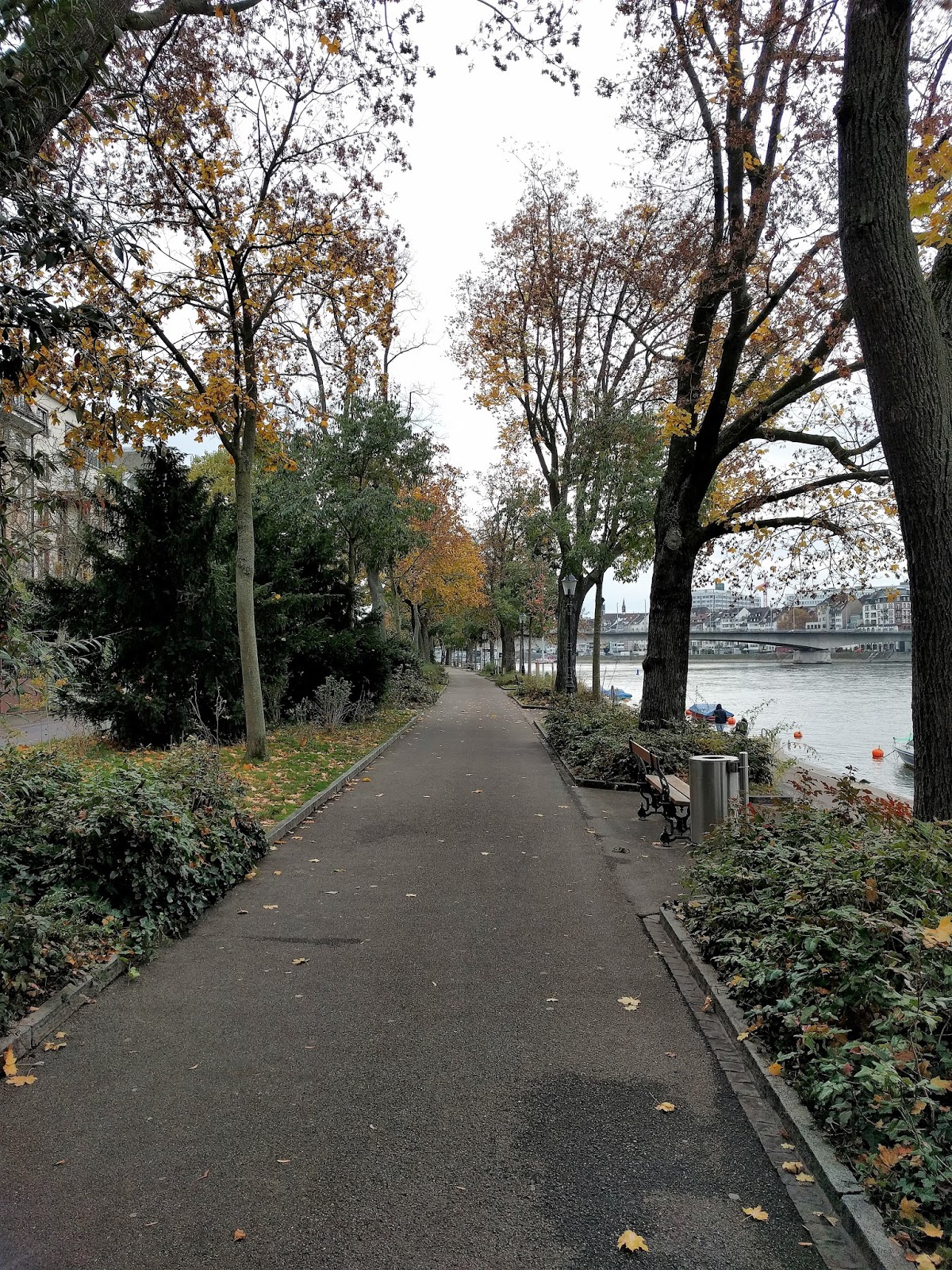
Stroll along the Rhein, Basel

Gulls along the Rhein, Basel


En route to the Botanic Garden, Basel
Altstadt, Basel
Picked up this lively print while in Basel

Checking out walking sticks at a charity shop in Basel

.
Yours truly on the Red Arrow Churchill from Zürich to Schaffhausen


I miss our life in Europe & would hope to return to live there, but, at present, a move does not seem feasible. Would that it were...!

Door knocking in Duboce Triangle and beyond...

Wednesday two weeks' back saw a small group of us go out knocking on doors for No on G, save Sunset Dunes Park. We tackled an area of to...